Google Analytics

Wednesday, 21 January 2015

What I hate about this place is the apathy, but there again who cares?

Somebody asked me the other day why I was so passionate about safety. I answered his question with a question, "Am I more passionate than you?" I have lost too many friends, been to too many funerals, and endured the horror of being first on scene of an aircraft crash to find someone with whom I had shared a few social moments the night before spread all over 2 miles of German countryside. I have seen the look on the faces of widows and orphans. I never want to experience any of that again.

http://i.telegraph.co.uk/multimedia/archive/01238/helicopter_crash3_1238515c.jpg


So how do we generate enthusiasm amongst those who have never been touched personally by tragedies brought about through unnecessary accidents? Of course those of us who are long in the tooth can tell a few war stories when the hanger doors are open. (and how we love doing that!) But that is hardly enough. I have to remember that the timing of the question was was during initial training for all employees about our All New Safety Management System. My obvious passion for safety came across because I was so enthusiastic about SMS, and what it could do for us.

There are many reasons why an SMS is the right way to go, and many of those reasons have already been well documented. (See the United States Helicopter Safety Team (USHST) website for many such examples.) I have yet to see anybody concentrate on the fact that a well-organized, well-designed, and well-supported SMS can do a great deal to encourage the apathetic. Under our old safety system there was one twelve-month period when not one safety concern report was filed. I come to find when I return to the job that it was mainly because, "nothing ever gets done." So if your policy makers commit to and devote the resources to a safety management system, they are therefore by definition committed to being much more responsive. It is little good having a non-punitive reporting system if the general perception is that nothing will get done.

http://media3.s-nbcnews.com/i/newscms/2014_15/314101/140409-unmh-chopper-crash-jms-2139_f3133d0c6da1a33e07778a744569fc53.jpg


One of the pillars of SMS is safety promotion, difficult in the old paper-based systems. How do you get a completed safety investigation piece of paper into everyone's hands? Under our SMS when a form is posted, all employees can read what was found on the investigation, what was done to fix a problem, and what residual risk has been accepted by the accountable executive. Who? A requirement of SMS is to identify the person who controls the purse strings in the organization. That person is therefore required to sign off on risk management and hazard analysis processes.
If you want to add to those two major advantages just one more feature of SMS it would have to be as follows. Many of us have seen trite phrases on notices saying, "Safety is our number one priority,” when we know it is not. By making people accountable from top to bottom within an organization you can only add to that safety culture where it is no longer acceptable to walk past a hazard that you see, it is no longer acceptable to ignore the reports of people who care, and it is no longer acceptable to minimize the risks associated with our “risky business.” Members of the organization with any brain whatsoever know full well the hollowness of the often quoted phrase, "We are a safe organization; we have never had an accident." That may just be luck, because statistically most aviation operations have existed for many decades without an accident.


With SMS in place, running well, supported by all levels of the company, we can now say, 

"We are a safe organization, and we can prove it!"


Wednesday, 14 January 2015

HERALD OF FREE ENTERPRISE - Ships and Planes and Managers who don’t know!


HERALD OF FREE ENTERPRISE


Ships and Planes and Managers who don’t know!


Have you ever wondered if a pilot in command can learn safety lessons from a ship's captain? The answer is unreservedly yes because the similarities between the two professions are remarkable. Both are in command. Both are ultimately responsible for the safety of their vessel, their crew, and their passengers. And strangely enough in many cases they are working for people who are not experts in their profession. One of the requirements of a Safety Management System (SMS) is to define an accountable executive, he who controls the purse strings. How many pilots are working for pilots? For that matter, how many sea captains are working for sea captains? In both cases not many.

The historical lesson we can take from previous accidents in either field, whether in the air or on the sea, cannot be more clearly highlighted than by a study of the Herald of Free Enterprise Disaster. This was a roll-on roll-off ferry that capsized on 6 March 1987 causing the deaths of some 188


persons because it left port with the bow doors open.  This was, as are many transportation accidents, a human error accident. The report into this accident (UK Department of Transport MV Herald of Free Enterprise Report of Court No. 8074, MV Herald of Free Enterprise) said, “At first sight the faults which led to this disaster with the aforesaid errors of omission on part of the master, the chief officer, and the assistant boatswain…" (Report paragraph 14.1) As usual, this is not the whole picture. Somewhat controversial for the time, the report's authors created somewhat of a precedent of adding the cause, "Failure of Management", to the list of causes. The most damning piece of the report is, "…all concerned in management, from the members of the board of directors down to the junior superintendents, were guilty of fault in that all must be regarded as sharing responsibility for the failure of management. From top to bottom the body corporate was infected with the disease of sloppiness."

To best illustrate this failure of management the report examined in detail the consideration that had been given, at the request of the sea captains, to fitting an indicator system to show whether the bow doors were open or closed. The captain's concerns were repeatedly documented and yet rejected for the reasons of costs or even trivial, sarcastic, and frankly incredible statements such as, “do not we pay somebody to close the doors?" Another management failure was the lack of clear orders for the crews and their officers. In short, nobody was actually ordered to close the doors. There was evidence that on many occasions the ships had been overloaded, that they sailed incorrectly ballasted and therefore unstable, and that these shortcomings had been drawn to the attention of management on many occasions by the captains.

So who were these captains working for? The report states, "… those charged with the management of the company's fleet were not qualified to deal with many nautical matters and were unwilling to listen to their masters, who were well qualified." Does this sound familiar to many a pilot? How many pilots work for management qualified to deal with aviation matters? Are not many aviation companies run by those with degrees in business, or accountancy, or almost anything except aviation? Surely this must lead to the same frustrations the ferry captains must have felt at the lack of action on serious concerns and other safety issues they had raised with management?

So is there a possible way to solve the issue of specialists working for layman? This whole story of the Herald of Free Enterprise was actually a pivotal point in the history of safety management. The introduction of safety management systems to the transportation industry in particular has many attractive features. Perhaps the most important has already been mentioned; the identification of the accountable executive. This defines, perhaps for the first time, the desk upon which Harry S Truman's sign, “the Buck Stops Here,” must sit. Part of the measure of a safety culture is the attitudes and commitment of management toward safety; having committed to adopting SMS that attitude is by design subject to change.

So if we are truly to learn from this tragedy management must listen to those who are experts in their appropriate field, react to hazards identified by their experts, and prove that they really are committed to safety by their actions not by their words. Pilots can learn from this too, for they are in the best position to find hazards both in the air and on the ground. They only have themselves to blame if they do not report these hazards.

So has your organization recently adopted SMS? Have you had your Herald of Free Enterprise moment? Have you noticed your management responding more positively to your concerns than before?


Monday, 26 May 2014

Today is Memorial Day in the USA.

On Memorial day here in the USA we remember the sacrifice of those who served. Remembrance Day in the UK is the same. We were wondering the other day when the tradition of wearing a poppy began so googled it!

Here's the story about Remembrance poppy


Going to personal remembrances, I often think of both my parents on these two days. Both were veterans of WWII and indeed met because of that war. Dad was US Navy, and Mom was in the British WRENS.

Here is a photograph of Dad and me looking at the Sea King helicopter at RAF Coltishall.


Thank you all servicemen and women of both countries who served.


Prince William takes new job! Congratulations.

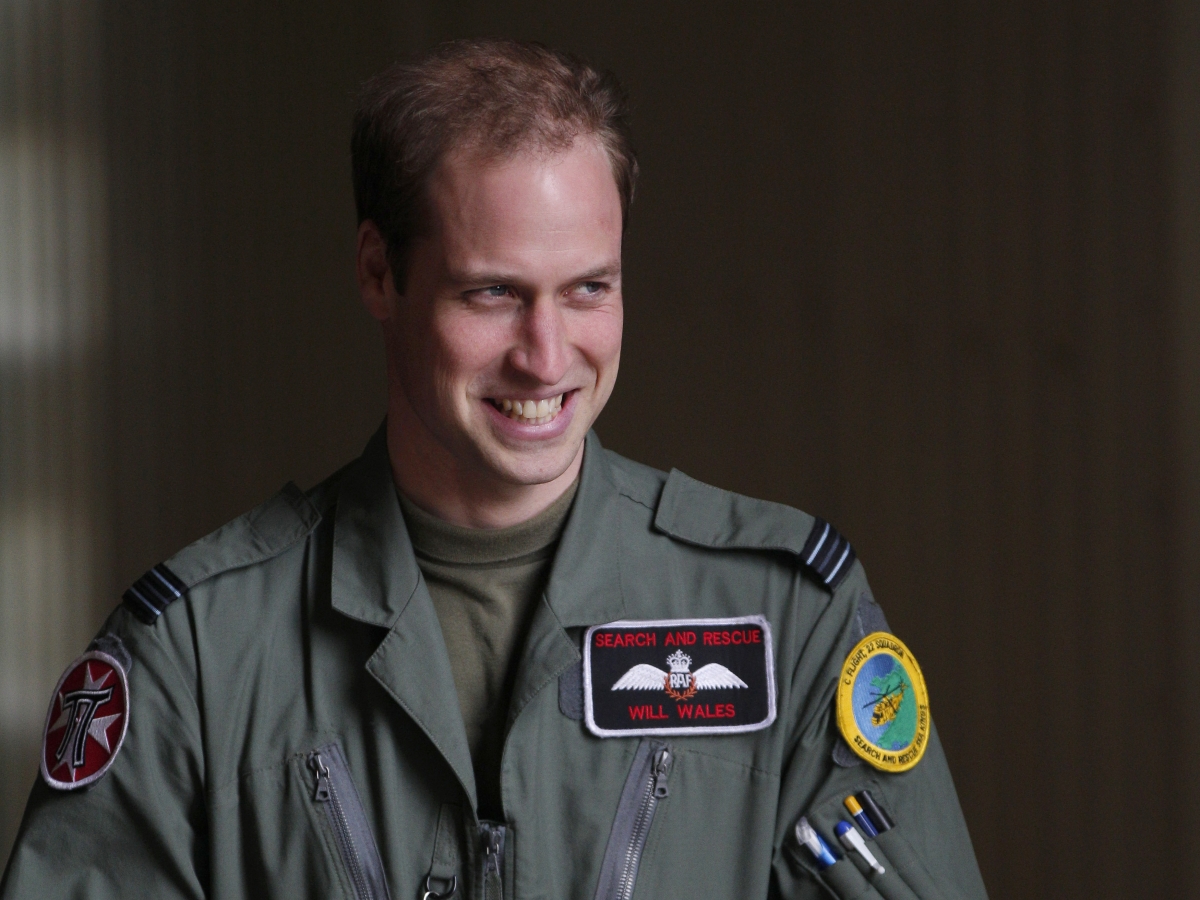
His Royal Highness, Prince William, Duke of Cambridge KG KT ADC(P) begins a new job at East Anglian Air Ambulance, according to reports. This is certainly a natural progression for a former RAF Search and Rescue pilot. I wish him great success in the new job, and can assure him that it can be just as rewarding as SAR.

Have a look at this news item: International Business Times 


Wednesday, 2 October 2013

Acapella, one of the best forms of music, Sam Robson.

Greetings, few followers.

So I use Facebook, I subscribe to some pages, I get daily emails from favorite websites, and sometimes a gem appears.

Godvine hit me with an acapella arrangement of "How Great Thou Art" by Sam Robson.

So I listened and listened, and am absolutely gobsmacked by it all. (There's a British bit of slang for you!)

So if you'd like to support this young British arranger, buy his digital album here.


Sunday, 22 September 2013

History - a fascinating subject.

If you have an inquisitive mind, you may enjoy reading about history. Perhaps we simply do not learn from our mistakes, but if we read about the past, and read with a critical viewpoint refusing to allow progressive authors to rewrite history, then perhaps we can learn.

One of my favorite TV channels is the History Channel.

For example, Today in History produces this list, you may click on the links to view the articles.


This Week in History, Sep 22 - Sep 28

Sep 22, 1862
Lincoln issues Emancipation Proclamation
Sep 23, 1875
Billy the Kid arrested for first time
Sep 24, 1789
The First Supreme Court
Sep 25, 1957
Central High School integrated
Sep 26, 1960
First Kennedy-Nixon debate
Sep 27, 1779
John Adams appointed to negotiate peace terms with British
Sep 28, 1941
Ted Williams becomes last player to hit .400

Monday, 29 April 2013

APP NET - a somewhat different alternative to TWITTER

Greetings.

Not posted in the blog for a while, I plead pressure of work, moving home, etc.

Just watched a ScreenCastOnline podcast about APP.NET. It's a new alternative to TWITTER, with the following text in their "About" page.

App.net is an ad-free, subscription-based social feed and API. App.net aims to be the backbone of the social web through infrastructure that developers can use to build applications and that members can use for meaningful interactions. App.net launched in August of 2012. It's owned and operated by Mixed Media Labs, founded by CEO Dalton Caldwell and CTO Bryan Berg.

So it emphasizes development of new applications, and thus is somewhat specialized. However, the applications that currently are listed are high quality. Why do I like the service? Simply because the applications I have tried are of a high quality, which makes life much easier than, say, browsing the thousands and thousands of poor quality apps on the Apple app store.

Watch the ScreenCastOnline podcast about it here

They have a free service, and two levels of paid service! Join in and look for me @CaptainKirk1950